Hello,
This is Respect Plastic Surgery. :)
For those of you who have a wide forehead or are concerned about forehead wrinkles,
today we will introduce Forehead Reduction Lift Surgery, which combines a forehead reduction and a forehead lift. :D
What Is a Forehead Lift?
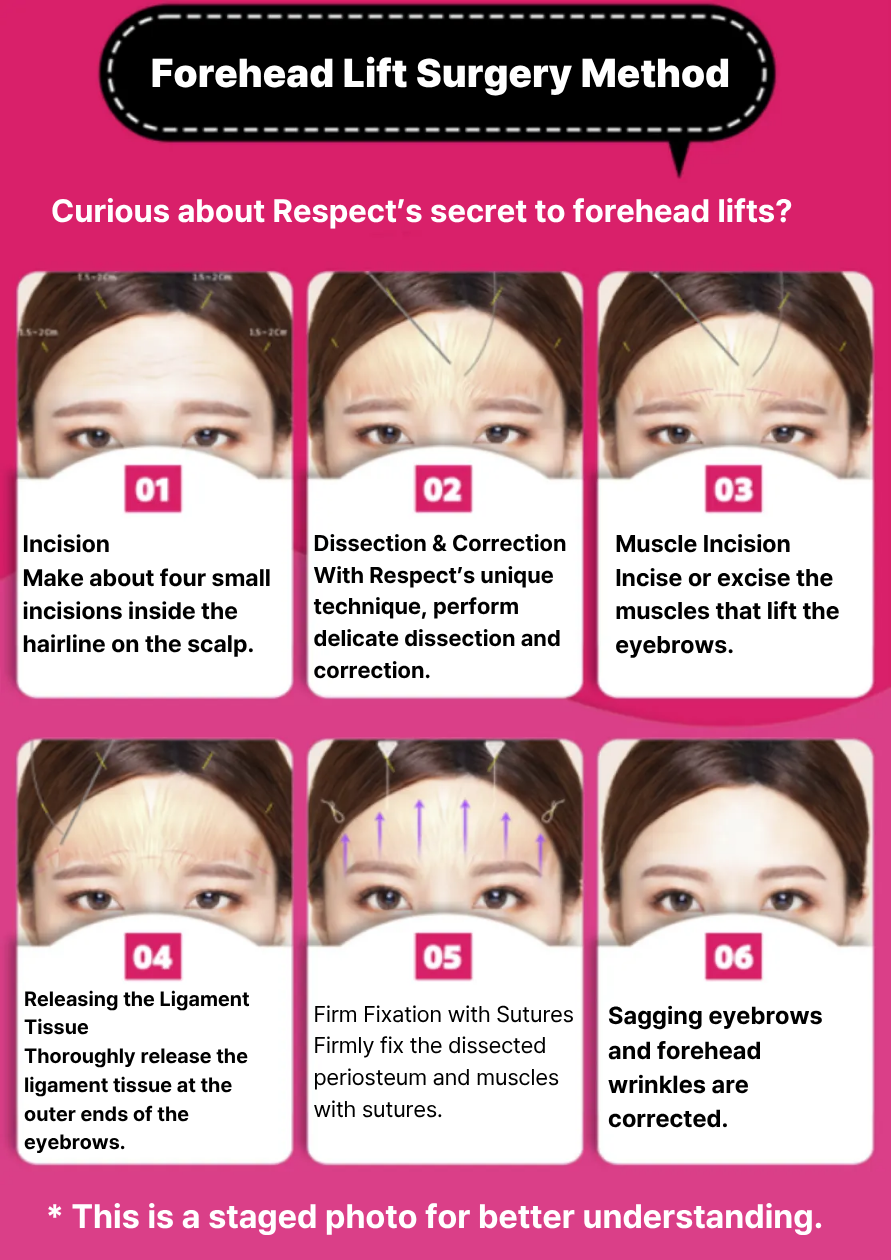
A forehead lift involves making two to three, or up to four, small incisions along the hairline or scalp area to lift the forehead and eyebrows, thereby improving forehead wrinkles, the eye area, and drooping eyelids.
During surgery, various muscles around the eyes are released, the entire scalp is lifted, and the incisions are then secured in place.
What Is a Forehead Reduction?
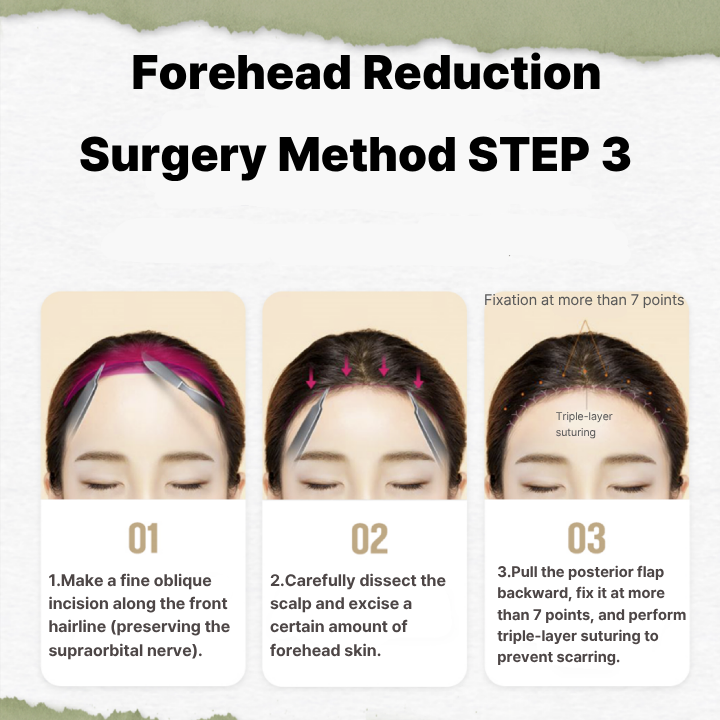
Forehead reduction is a procedure that decreases the actual size of the forehead.
If the hairline is asymmetrical, it can be corrected, and the incision is designed considering the direction of hair growth to preserve the hair follicles.
The scalp itself is then lowered and fixed.
⸻
Who May Consider a Forehead Reduction Lift?
• Those with a wide forehead
• Those with significantly drooping eyelids
• Those with deep forehead or glabellar (between the eyebrows) wrinkles
• Those with asymmetric or sagging eyebrows
Unique Points of Forehead Reduction Lift
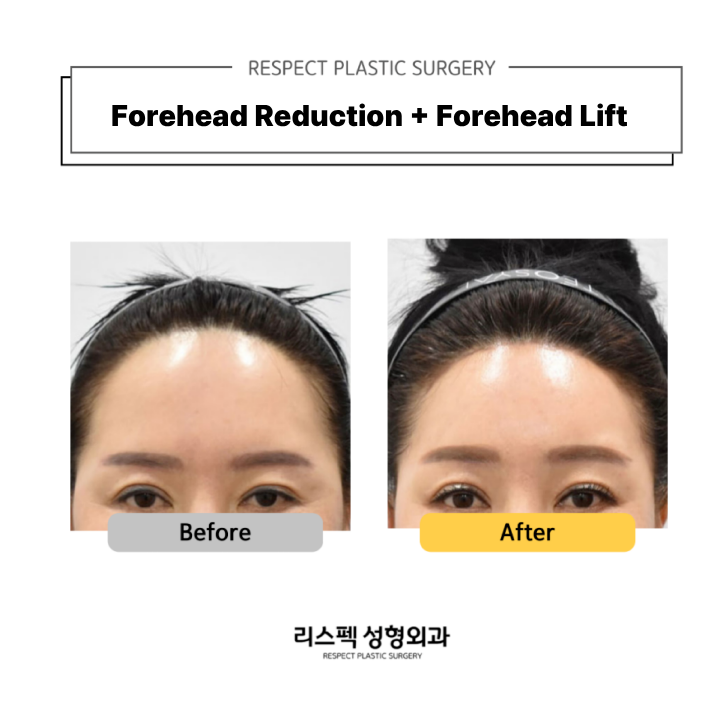
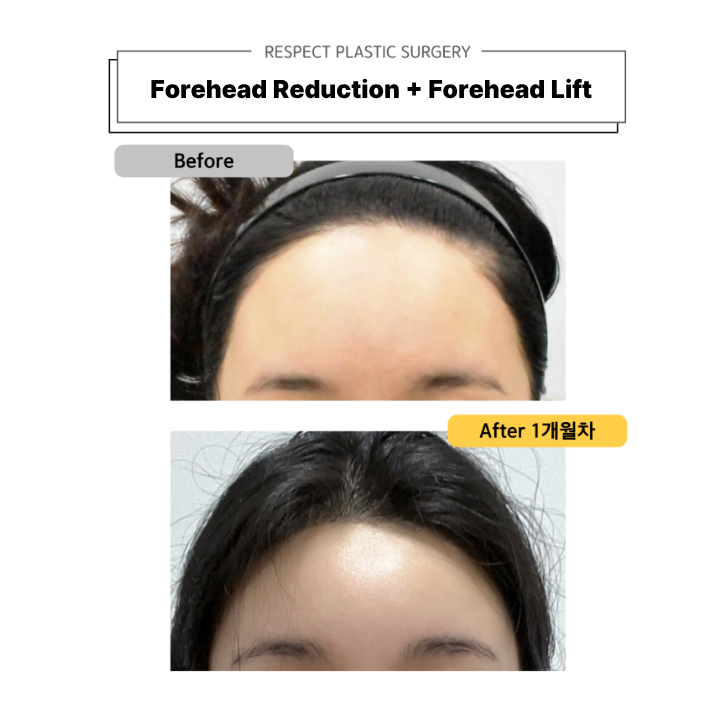
By combining a forehead reduction with a forehead lift, you can enjoy the benefits of both procedures simultaneously, plus additional advantages.
It reduces forehead length while improving wrinkles, facial expression, and correcting drooping eyebrows.
• Allows for a greater degree of forehead reduction
• Because the procedure uses the incisions of a forehead lift, the effectiveness and longevity are more reliable and guaranteed
Recovery Time After Forehead Reduction Lift
Swelling is usually at its peak 2–3 days after surgery rather than on the day of surgery.
While this varies by individual, swelling typically improves within 1–2 weeks and may last up to 3–4 weeks in some cases.
Most people can return to daily activities within about a week. :)
Postoperative Care
Medication
Due to residual anesthesia, you may experience headaches, dizziness, or nausea after surgery.
Take the prescribed medication as directed, and if pain persists, you may additionally take Tylenol.
Swelling Management
To help reduce swelling and bruising after surgery, apply cold and warm compresses appropriately.
Use cold compresses for about 3–5 days after surgery, then switch to warm compresses (not hot, just comfortably warm) to aid recovery.
⸻
Hair Shampooing
Because the incision is on the scalp, shampooing can irritate the area.
It is best to start shampooing 3 days after surgery.